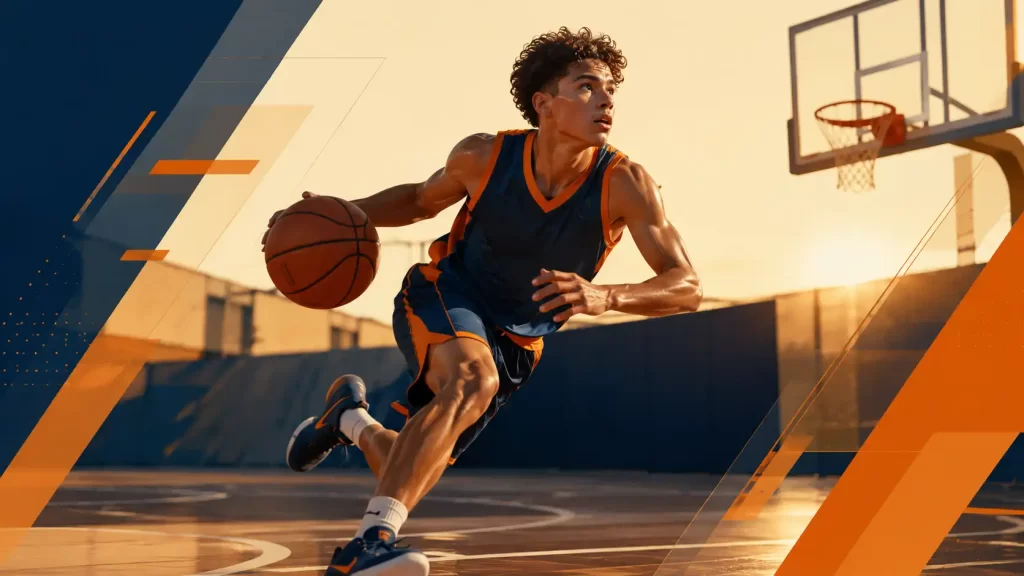
For the past two seasons, a wave of older, experienced professional players from overseas leagues has been arriving on U.S. college basketball rosters. That trend may be about to slow down — and for American high school players and their families, that is news worth understanding.
As we explored recently in Why International Players Now Rule the NBA, American basketball's real challenge was never talent — it was development. This news adds the second half of that story: even as the international game keeps producing elite players, a window may be reopening at the college level for U.S. high school athletes who are ready to step through it.
In May 2026, the NCAA distributed updated international eligibility guidance to its member schools aimed at prospects who have already competed as professionals abroad. It is not a court ruling and it is not a finished, set-in-stone rule. But it signals a clear direction, and it could change how college programs build their rosters going forward.
This isn't the door slamming shut on the world.
It's a window reopening for American high schoolers.
01 What the New Rules Actually Say
Here is the part that matters, stated plainly and without exaggeration.
The Core of the Guidance
The NCAA's updated guidance, distributed to schools in May 2026, states that prospective student-athletes who entered an agreement with, competed on, or received compensation from a team in a league whose minimum pay exceeds an athlete's actual and necessary expenses may not have their college eligibility reinstated.
The NCAA pointed to top professional leagues as examples. Europe's premier league, the EuroLeague, carries a first-year minimum salary widely reported around €50,000 — well above a typical "expenses only" threshold.
02 Read This Before You Draw Conclusions
We believe in giving you the full, honest picture, so a few caveats matter here:
| What People Assume | What's Actually True |
|---|---|
| "It's a ban." | It's guidance. It signals how the NCAA intends to evaluate eligibility — it does not automatically disqualify every international player. |
| "Every pro is out." | Enforcement is case-by-case, weighing how much a player earned and how competitive their league was. |
| "It's in effect now." | There is no firm start date. Reporting suggests the changes could take full effect after the 2026–27 season to give programs time to adjust. |
In short: the landscape is shifting, but it is shifting gradually. Anyone telling you the door has slammed shut on international players is overstating it. What is fair to say is that the NCAA is moving to protect college roster spots for genuine student-athletes rather than career professionals.
One distinction matters here. This guidance targets experienced professionals who earned real salaries abroad — not the young international prospects and development systems we admired in our last piece. The international game produces outstanding players, and that is not in question. This rule is simply about keeping college basketball for college athletes, which is what reopens the door for high schoolers.
03 Why the NCAA Says It's Doing This
The reasoning the NCAA has offered lines up almost word-for-word with why this platform exists. An NCAA spokesperson described the effort as modernizing the rulebook to ensure college sports are played by college athletes — not used as a fallback by professional athletes. The widely discussed implication is straightforward: keep more Division I roster spots available for American high school players working their way up the traditional path.
04 What It Means for You
For players. If programs lean less on older overseas professionals, more roster and recruiting attention can flow back toward high school talent coming up through the normal pipeline. That only helps you if coaches can actually find you. A complete, verified profile with current highlight video is how you stay in the conversation when a coach is filling a spot.
For parents. The recruiting environment is tilting back toward the players this platform was built to serve. But visibility is not automatic. The families who benefit most from a shift like this are the ones whose athlete is already in the verified pool — discoverable, documented, and ready when a coach comes looking. Getting that in place early, while membership is free, costs you nothing and keeps your options open.
For coaches. As eligibility questions add uncertainty to international recruiting, a verified pool of domestic high school talent becomes more valuable, not less. Knowing a prospect is real, eligible, and evaluated for both skill and durability removes risk from your board. That is exactly what access to this platform's verified player pool is designed to deliver.
For Players
- More roster attention may flow back to the HS pipeline
- Coaches can only recruit players they can find
- A verified profile keeps you in the conversation
- Current highlight video matters when spots open
For Parents
- The environment is tilting toward your athlete
- Visibility isn't automatic — you have to be in the pool
- Early and verified beats late and unseen
- Free membership keeps your options open
For Coaches
- A verified domestic pool gets more valuable, not less
- Real, eligible, evaluated players lower your risk
- Skill and durability assessed in one place
- Less uncertainty than international recruiting
05 A Note for International & JUCO Players
This platform serves players at every level, including international and JUCO athletes. If you are navigating these eligibility questions yourself, the answer is the same: clarity and visibility are your best allies. A verified profile that documents your status and your game helps the right coaches evaluate you accurately in a changing environment.
06 The Bottom Line
College basketball recruiting is in motion, and the direction favors players who are developed, durable, and discoverable. A reopening window means little to an athlete coaches can't find or aren't sure can stay healthy — which is exactly the gap the High School Basketball Portal was built to close: helping athletes get discovered while staying healthy and extending their careers. The best time to be in the pool is before a coach goes looking — not after.
The door is reopening for American players.
The ones who are seen and prepared will walk through it.
Sources: NCAA eligibility guidance as reported by Sports Illustrated (May 2026); additional reporting from Yahoo Sports, 247Sports, and ESPN. Figures and quotes reflect public reporting at the time of writing; eligibility determinations are made by the NCAA on a case-by-case basis.
High School Basketball Portal · Free for All Players
Get Seen. Stay Healthy. Join Free.
Coaches can't recruit what they can't see. Build your profile, put your highlights in front of college coaches, and access the full Pre-Habilitation library — free for all players.
Join Free Today