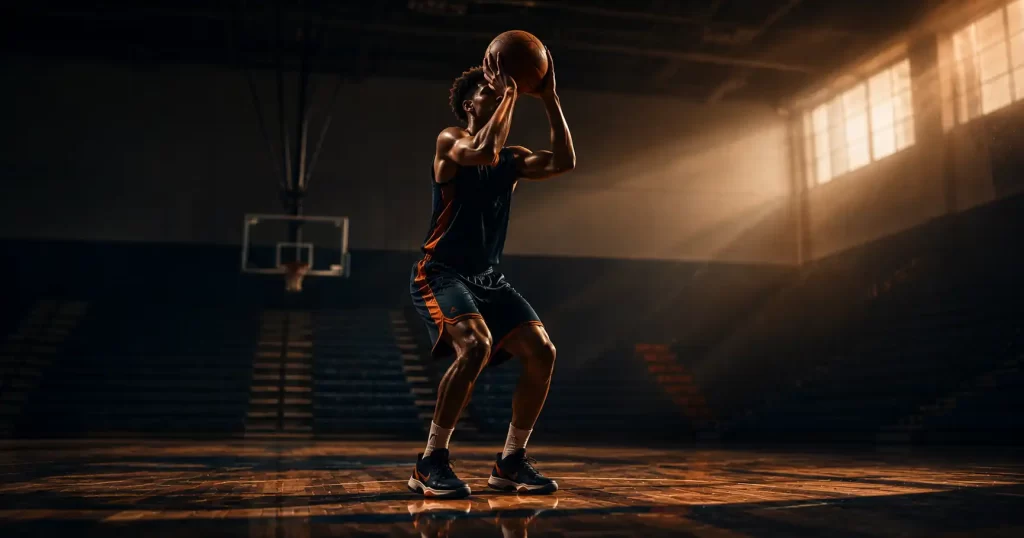
You’ve just wrapped your season. Maybe you averaged 15 points a game. Maybe you barely cracked the rotation. Either way — what you do next matters more than what you just did. The offseason is where high school players either fall off or level up.
If you want to get stronger, play smarter, and boost your visibility to college coaches, you need an offseason training plan that does more than “get shots up.” You need structure. You need goals. And most of all, you need discipline. This is your blueprint — let’s get to work.
The season never really ends.
What you do between seasons is what separates you.
01 Strength First: Build the Frame That Wins Matchups
Basketball is still a skill game, but don’t underestimate the physicality of the next level. College coaches don’t just look for scorers — they look for athletes who can handle contact, defend with intensity, and finish through bodies.
Your offseason strength plan should focus on:
- Compound lifts: prioritize squats, deadlifts, lunges, and pull-ups for overall athleticism.
- Core development: planks, ab rollouts, and anti-rotation movements improve balance and explosiveness.
- Mobility & injury prevention: daily stretching and foam rolling keep you flexible and available.
Tip
Work with a certified trainer or follow a structured plan built for basketball players. Lifting the wrong way — or just trying to “bulk up” — can hurt your game more than help. Our best training plan for high school players (not pros) and our pre-hab injury-prevention guide are the right places to start.
02 Skill Development: Go Deep, Not Wide
You don’t need 50 moves. You need three to five go-to skills you can execute in traffic, at game speed, under pressure.
Break your skill training into three categories:
- Primary weapon development: sharpen your jumper, your handle, or your post footwork — whatever your bread and butter is.
- Weakness targeting: identify your biggest liability and go after it daily.
- Situational IQ reps: work on reading pick-and-rolls, reacting to closeouts, and attacking different defensive looks.
A daily skill split that works:
- 60 minutes of high-intensity shooting or ball-handling drills
- 15 minutes of situational breakdowns (film or guided drills)
- 10 minutes of free-form creativity and experimenting
For a fuller picture of the habits that separate serious prospects, see training like a D1 athlete in high school.
03 Film Study: Learn to See the Game
Smart players make fewer mistakes — and coaches love smart players. Use the offseason to break down both your own film and footage of great players. Study how they move, how they create space, and how they defend.
Your film goals:
- Watch yourself: look at your mistakes with a coach’s eye.
- Track tendencies: do you always drive right? Always help too late?
- Watch others: study college players who play your position.
Pro Move
Keep a notebook of your film insights. Write down one or two things you’ll apply next time you hit the court. That habit is a big part of why high-IQ players get recruited faster.
04 Basketball IQ & Mental Training: Don’t Just Train the Body
Great players think faster than their defenders. Use part of your offseason to grow mentally:
- Read the rulebook: knowing it better than your opponents gives you an edge.
- Play chess, not checkers: learn to anticipate instead of react.
- Mental reps: use visualization before games and workouts.
Mindset builders:
- Journaling progress and goals
- Breathing drills and pre-game routines
- Mentally rehearsing key game situations (e.g., “down 2, 12 seconds left”)
05 Build Your Brand: Get Noticed by the Right People
You could be training like a future All-American — but if no one sees it, it won’t matter. Visibility is part of the game now.
Here’s how to build your recruiting brand in the offseason:
- Update your highlight reel: cut the filler and show your best 20–30 plays across scoring, defense, IQ, and hustle. Our guide covers what to include in your highlight tape (and what to leave out).
- Post with purpose: use Instagram and X to document progress and work ethic — the smart way, without blowing your shot.
- Join recruiting platforms: create or update your player profile with highlights, stats, and academic info — here’s why a verified profile boosts your exposure.
Coach Tip
Make it easy for college coaches to see who you are, what you bring, and how you’re improving. When you’re ready to reach out directly, use the templates in how to write a killer DM to a college coach.
06 Control What You Eat and How You Sleep
Every rep in the gym matters — but so does every meal and hour of sleep.
Nutrition keys:
- Prioritize lean proteins, fruits, vegetables, and complex carbs.
- Hydrate constantly.
- Cut out sugar-heavy drinks and processed food.
Sleep goals:
- Aim for 8–9 hours of sleep per night.
- Avoid screens for at least 30 minutes before bed.
- Use rest days to recover, not to slack off.
You can’t out-train a bad lifestyle.
Your gains depend on recovery.
07 Lock In a Daily Schedule
Every day you skip your plan is a day your competition gets better. Build a repeatable routine like this:
| Time | Task |
|---|---|
| 7:00 AM | Wake up + quick stretch |
| 7:30 AM | Strength training |
| 9:00 AM | Breakfast + recovery |
| 12:00 PM | Skill workout |
| 2:00 PM | Film or mental reps |
| 4:00 PM | Conditioning or pickup |
| 6:00 PM | Dinner |
| 8:00 PM | Journaling + social media update |
| 9:30 PM | Sleep routine begins |
Adjust the times for your summer job or team commitments — but keep the structure consistent. For a model to borrow from, see the daily routine of a college-level player.
08 Don’t Forget the “Why”
Hundreds of thousands of high school athletes play basketball every year. Coaches are looking for the ones who stay locked in when the lights aren’t on.
Ask Yourself
Why am I training today? Who am I trying to become? What do I want to be known for? You don’t need to be the most talented — you need to be the most prepared, the most consistent, and the most coachable. That’s how you stand out, and it lines up with the traits college coaches look for in recruits.
09 Final Word: This Summer Is Your Edge
No one gets better by accident. If you’re serious about taking your game to the next level — D1, D2, NAIA, or JUCO — it starts right now. Use this blueprint to sharpen your body, sharpen your mind, and build your brand. Get stronger. Get smarter. Get noticed.
You don’t need to be the most talented.
You need to be the most prepared.
High School Basketball Portal · Free Player Membership
Ready to Get Seen by Real Coaches?
Create your free player profile and put your stats, highlights, and offseason progress in one place coaches actually check. We built this platform for grinders who are serious about the next level. Coaches can request access from the coaches’ side of the platform.
Create Your Player Profile