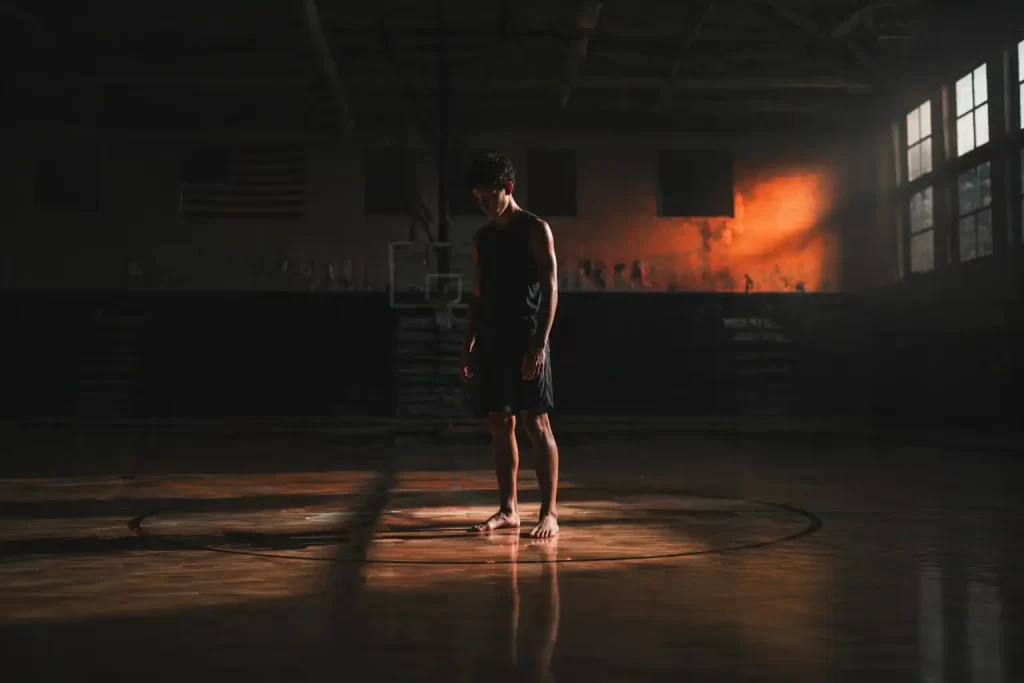
Your feet are the most overlooked part of a basketball player’s training. Players spend hours a week on quads, glutes, and core — and zero minutes on the 200+ muscles, tendons, and ligaments doing the actual ground contact. That’s a missed opportunity, and often a missed injury waiting to happen.
Strong, mobile, well-controlled feet aren’t just about preventing plantar fasciitis or turned ankles. They’re a performance advantage. Players with stronger intrinsic foot muscles jump higher, change direction more sharply, and stay balanced through contact. The foundation of every kinetic chain in basketball starts at the floor.
This guide breaks down the three pillars of basketball foot strength — intrinsic foot muscles, arch support, and toe mobility — and gives you the exact drills that build all three in under fifteen minutes a day.
01 Why Foot Strength Matters More Than You Think
Basketball is one of the most foot-intensive sports in existence. A single game involves hundreds of jumps, sprints, stops, cuts, and crossovers — and every one of those movements starts and ends at your feet. When the foundation is weak, everything above it has to compensate.
Weak feet don’t just hurt your feet. They send problems up the chain:
- Reduced vertical jump and slower first-step explosiveness
- Poor balance on landings and contested plays
- Chronic arch pain, plantar fasciitis, and stress fractures
- Ankle sprains — because the ankle can’t stabilize what the foot won’t control
- Shin splints, knee pain, and hip tightness from poor force absorption at the ground
The good news: foot strength responds fast. Most players feel a noticeable difference in balance and ground feel within two to three weeks of consistent daily work. The drills are simple, equipment-free, and can be done while watching film or between classes.
HSBP Pre-Habilitation Insight
Modern basketball shoes are part of the problem. Thick, cushioned, structured footwear does the stabilization work your foot muscles should be doing. Over years of wear, the intrinsic muscles atrophy from disuse. The fix isn’t better shoes — it’s training the muscles inside them.
02 Pillar 1 — Intrinsic Foot Muscles
Your intrinsic foot muscles are the small muscles that live entirely within the foot itself. Unlike the larger calf muscles that move the foot from above, the intrinsics control the fine-tuned movement of your toes, arch, and midfoot. Think of them as the “core muscles” of your foot — they don’t produce big movements, but they stabilize every movement that does.
For a basketball player, weak intrinsics mean the foot can’t grip the court, can’t control landing position, and can’t transfer force efficiently during push-off. You leak power on every play and load stress into your ankles and knees instead.
Training Drill — Short Foot Exercise
- Sit or stand with your foot flat on the floor
- Without curling your toes, actively shorten your foot by drawing the ball of your foot toward your heel
- You should feel the arch lift slightly — that’s the intrinsic muscles firing
- Hold for 5 seconds · relax · repeat
- 3 sets · 10 reps per foot · daily
- Progression: seated → standing → single-leg
Training Drill — Toe Spreads
- Foot flat on the ground, attempt to spread your toes as wide apart as possible — like a fan
- Hold the spread for 3 seconds, then relax
- Activates the small intrinsic muscles between each toe that almost never fire inside basketball shoes
- 3 sets · 15 reps per foot · daily
Training Drill — Barefoot Balance
- Stand barefoot on one foot for 30 seconds
- When that’s easy, close your eyes
- When that’s easy, stand on a folded towel or pillow for added instability
- Forces the intrinsics to constantly fire and correct your position — exactly what they need to do on a contested landing
- 3 sets · 30–60 seconds per foot · 3–4×/week
03 Pillar 2 — Arch Strength
Your arch is the foot’s natural shock absorber. When you land from a rebound or stop on a drive, the arch flattens slightly to absorb force, then springs back to help propel your next movement. A strong, elastic arch makes you more efficient, more explosive, and far less likely to develop overuse injuries.
When arches are weak or collapsed — often called flat feet or overpronation — the foot can’t spring back efficiently. Players who overpronate waste energy on every step, fatigue faster, and develop knee and hip pain from poor alignment. The solution isn’t orthotics. It’s training the muscles that actively support the arch.
What Weak Arches Look Like
- Inside edge of basketball shoes wears out faster than the outside
- Arches “collapse” visibly when standing (the inside of the foot flattens to the floor)
- Knees drift inward on squats and landings
- Chronic achiness along the inside of the shin or arch after games
Training Drill — Towel Scrunches
- Place a small hand towel on a smooth floor
- Sit with your foot on the towel and use only your toes to scrunch the towel toward you, inch by inch
- Directly strengthens the muscles that lift and support your arch
- 3 sets · full towel per set · 4–5×/week
- Progression: add a small weight to the far end of the towel for resistance
Training Drill — Arch-Focused Calf Raises
- Standard calf raise, but with a key tweak
- As you rise, focus on pressing down through the ball of your big toe and lifting the arch actively
- Cue: imagine rolling up the inside of your foot, not the outside
- 3 sets · 15 reps · 3×/week
- Progression: single-leg, then with a small knee bend to target deeper muscles
Coach’s Tip
If you’ve been told you have “flat feet,” don’t assume it’s a permanent structural issue. Most cases of functional flat foot in young athletes respond dramatically to consistent arch and intrinsic training. Give it 6–8 weeks of daily work before drawing conclusions — and before spending money on custom orthotics.
04 Pillar 3 — Toe Mobility
Toe mobility — especially the ability to extend your big toe upward — is one of the most under-appreciated performance factors in basketball. Your big toe is the final point of contact with the floor on every push-off, and its ability to extend properly determines how much force you can generate.
The big toe joint needs approximately 65 degrees of extension for a normal athletic stride. Players with restricted big toe extension leak power on every sprint, jump, and cut — and usually don’t know that’s what’s holding back their explosiveness. Over time, restricted toe mobility also contributes to plantar fasciitis, bunions, and chronic forefoot pain.
The Self-Check
Stand barefoot. Keeping your heel on the floor, try to lift your big toe straight up while keeping the other four toes pressed down. Can you lift it at all? Can you lift it independently? Most players can’t — which tells you exactly how disconnected they are from their foot control.
Training Drill — Big Toe Extension Stretch
- Kneel with your toes tucked under (toes pointing forward, top of foot flat on the floor, heel up)
- Gently sit back onto your heels to create a stretch through the bottom of your toes and arch
- If too intense, place your hands in front of you to take some weight off
- Hold 30–60 seconds · 2–3 sets · daily
- Especially effective after practice or games
Training Drill — Toe Yoga
- Sit or stand with your foot flat
- Lift only your big toe while keeping the other four toes pressed down · hold 3 seconds
- Reverse: keep the big toe pressed down while lifting the other four toes
- Surprisingly difficult at first — that difficulty is exactly why it matters
- 3 sets · 10 reps each direction per foot · daily
Training Drill — Ball Self-Massage
- Stand with a lacrosse ball or tennis ball under your arch
- Slowly roll the ball from heel to base of toes, spending extra time on tender spots
- Releases the plantar fascia and surrounding tissue — directly improves toe mobility and arch function
- 2 minutes per foot · daily, especially on heavy practice days
05 The Signs Your Feet Need More Attention
Not sure if foot weakness is holding back your game? Run through this self-assessment. The more items you check, the more value you’ll get from a consistent foot strength program:
- You can’t balance on one bare foot for 30 seconds with your eyes closed
- Your feet ache or cramp during or after games
- You’ve been told you have flat feet or that you overpronate
- You can’t lift your big toe independently of your other toes
- You’ve had recurring ankle sprains, shin splints, or plantar fasciitis
- Your basketball shoes wear unevenly on the inside or outside edge
- You feel unstable on contested landings or quick direction changes
- Your arch visibly collapses when you stand
Most players check at least two or three. That’s not a failure — it’s just where modern footwear and training leave most athletes. The fix is simple, free, and takes less than 15 minutes a day.
06 Your Weekly Foot Strength Routine
You don’t need a separate training day for your feet. Most of these drills stack into a 10-minute daily routine you can do before practice, after practice, or while watching film at home. Consistency beats intensity — daily short sessions will transform your feet faster than heroic once-a-week efforts.
| Frequency | Focus | Drills | Time |
|---|---|---|---|
| Daily Core Every day |
Intrinsic activation + toe mobility | Short Foot, Toe Spreads, Toe Yoga, Ball Self-Massage | 5–10 min |
| Build Days 3–4×/week |
Arch strength + balance | Towel Scrunches, Arch-Focused Calf Raises, Barefoot Balance, Big Toe Stretch | +10 min |
| Recovery Post-game |
Release + mobility | Ball Self-Massage, Big Toe Stretch, Short Foot holds | 5 min |
Add this work to your existing prehab routine — it’s not a replacement for ankle training, mobility, or strength work. Think of foot strength as the missing link that makes all your other training more effective.
07 Common Mistakes That Waste Your Time
Once you start foot training, a few habits can quietly sabotage your progress. Watch for these:
Mistake 1 — Curling the Toes Instead of Shortening the Foot
On the short foot exercise, many players cheat by curling their toes downward. That uses the wrong muscles. Fix: keep your toes flat and long — only the arch should lift.
Mistake 2 — Wearing Shoes for Every Session
Foot strength drills need bare feet to work. Shoes do the stabilization for you. Fix: do all foot work barefoot or in thin socks on a non-slip surface.
Mistake 3 — Doing the Drills Once a Week
Foot muscles respond to frequency more than intensity. One ambitious session per week won’t move the needle. Fix: short daily sessions, even 5 minutes, beat a single 30-minute push.
Mistake 4 — Ignoring Pain as a Signal
Muscle fatigue and a good stretch are fine. Sharp pain, numbness, or radiating discomfort are not. Fix: stop immediately and see a sports medicine professional if pain persists beyond a few days.
Mistake 5 — Expecting Overnight Results
Foot strength builds measurably in 2–3 weeks, but lasting changes take 6–8 weeks of consistent work. Fix: commit to a full eight-week block before judging whether it’s working.
08 Red Flags — When to See a Professional
Foot strength training is proactive work, not a substitute for medical care. See a sports medicine doctor or physical therapist if you experience any of the following:
- Sharp, stabbing heel pain that’s worst with your first steps in the morning
- Persistent arch pain that doesn’t improve with rest and ice within a week
- Numbness, tingling, or burning sensations in the foot
- Visible swelling, bruising, or deformity
- Pain that shifts your gait — favoring one foot, avoiding certain movements
- Previously diagnosed stress fracture, plantar fasciitis, or tendon injury
Early diagnosis changes outcomes. A small stress fracture caught at week one might mean two weeks of rest. The same fracture pushed through for a month can mean a full season off the court.
09 What Strong Feet Look Like on Film
College coaches don’t watch your feet specifically — but they absolutely notice the effects of strong feet. When a player has done the foundational foot work, it shows up in every other movement on film.
- Clean, balanced landings without visible wobble or correction
- Sharp direction changes with the body staying upright and controlled
- Quiet footwork — no heel-slap or flat-foot slaps on the court
- Stable base on contested shots and contact finishes
- Explosive first step with a clear push off the big toe
These are the movement signatures of a physically mature athlete. Coaches evaluating film are pattern-matching on exactly this kind of movement quality — often without being able to articulate why one player looks more “ready” than another.
HSBP Platform Note
Your highlight video on HighSchoolBasketballPortal.com is a scouting document. The way your feet work on every landing, cut, and drive tells a coach how you’ve trained. Players who move from a strong foundation project athletic maturity that separates them from equally talented peers who skipped the foundational work.
10 Quick Reference Cheat Sheet
Save this section. Review it once a week until the drills become automatic.
Intrinsic Foot Muscles
- The “core muscles” of your foot
- Control landing position and ground grip
- Atrophied by cushioned shoes
- Short Foot · 3×10 daily
- Toe Spreads · 3×15 daily
Arch Strength
- Your foot’s natural shock absorber
- Springs back to drive push-off
- Weak arches = knee and hip pain upstream
- Towel Scrunches · 3 sets · 4–5×/wk
- Arch-Focused Calf Raises · 3×15
Toe Mobility
- Big toe needs 65° of extension
- Final point of contact on push-off
- Restricted = leaked power, plantar fasciitis
- Big Toe Stretch · 30–60 sec daily
- Toe Yoga · 3×10 each direction
Daily Habits
- Train barefoot whenever possible
- 10 minutes daily beats 30 minutes weekly
- Ball massage after every heavy practice
- Commit to a full 8-week block
- Balance drills with eyes closed
11 The Bottom Line
Your feet are the foundation of every movement you make on the basketball court. Neglect them, and every cut, jump, and landing is built on sand. Train them consistently, and every other part of your game — balance, explosiveness, injury resistance, recruitability — benefits.
The drills in this guide cost nothing, require no equipment, and fit into the gaps in your day. Ten minutes while you watch film. Five minutes before bed. A few sets between classes. The barrier isn’t time or money — it’s whether you treat foot strength as real training or optional extra-credit work.
Players who do this work separate themselves. They stay on the court longer. They move more cleanly. They get noticed by coaches who watch for physical maturity as closely as they watch for talent. Start the drills this week. Build the habit over the next eight. Your feet — and your career — will feel the difference.
The feet are the foundation. Neglect them,
and every kinetic chain above them pays the price.
High School Basketball Portal · Player Membership $18 a Year
Build the Foundation. Stay Healthy. Get Recruited.
HSBP is the only recruiting platform built with Pre-Habilitation as a core feature. Access foot strength drills, ankle protection programs, and full mobility routines.
Join Today