

Do You Need AAU to Get Recruited? What Actually Gets Players Seen
Everyone tells parents the same thing: get on the AAU circuit or get left behind. It's an expensive message — and a stressful one. Here's the honest answer, and why fundamentals and a healthy body matter more than another weekend of games.
If you're a parent or coach trying to do right by a player who loves this game, you've heard the same message from every direction: get on an AAU team, play the circuit, or fall behind. So let's answer the real question underneath it: do you actually need AAU to get recruited? The honest answer is more encouraging than the circuit wants you to believe — and it matters for both your player's development and their long-term health.
This piece pairs with our balanced look at when AAU helps, when it hurts, and how to use it right. Read together, they point to one conclusion: the players who win long-term are the ones who build real skills, protect their bodies, and stay visible to coaches.
Fundamentals and a healthy body travel to every level.
A packed tournament schedule does not.
01 The Short Answer: No — But You Do Need Exposure
No, a player doesn't have to play AAU to earn a college roster spot or a scholarship. Coaches recruit talent, character, and fit — not a logo on a jersey. What trips families up is that AAU bundles two very different things into one expensive package: development and exposure. You can get both somewhere else, usually for far less money and far less wear on a young body.
Keep those two ideas separate as you read, because the rest of this article answers two questions: is the circuit the best way to develop a player, and is it the only way to get them seen? For a clear sense of what coaches are actually evaluating, start with our breakdown of the top five things college coaches look for in recruits.
02 What AAU Does Well — and Where It Falls Short
Let's be fair to AAU first. Its real strength is concentrated exposure: at a major event, dozens of college coaches can watch hundreds of players in a single weekend, against strong competition. That's genuinely useful for a prospect who has outgrown the local league.
The problem is what too many circuits trade away to deliver it. The model rewards games over training — weekends stacked with back-to-back contests and very little practice, skill work, or recovery in between. Add the pay-to-play cost, the travel, and the pressure to play year-round, and you get a system optimized for being seen rather than for getting better.
| What Parents Often Assume | What's Actually True |
|---|---|
| "More games and tournaments make my player better and more recruitable." | Skill is built in training, not in a fifth game on a Sunday. Volume without recovery mostly builds fatigue — and injury risk. |
| "AAU is the only way to get seen by college coaches." | Exposure is the goal, not the circuit. A verified profile and current film put a player in front of coaches year-round. |
| "If we skip AAU, we fall behind." | Players reach the college level through high school ball, prep programs, skills training, and direct outreach every year. Development and visibility matter more than a schedule. |
03 The Hidden Cost: More Games, Less Training
This is the part of the conversation that gets skipped, and the one a parent should care about most. When a young athlete plays one sport year-round and stacks games without real rest, the body pays for it — and the sports-medicine research here is not subtle.
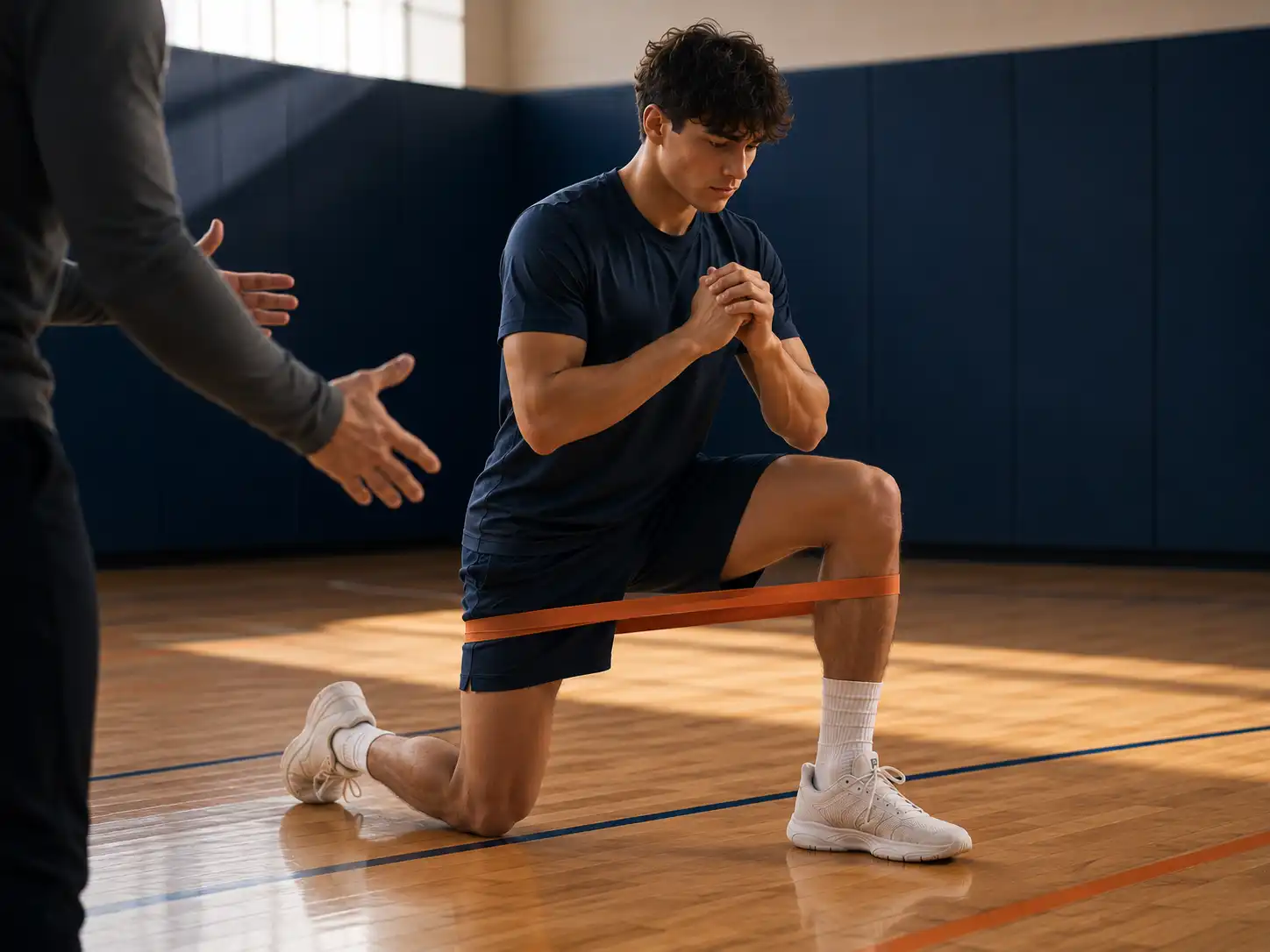
What overuse looks like in basketball players
The American Academy of Pediatrics estimates that roughly half of all youth sports injuries are overuse injuries — the slow-building kind caused by repeating the same movements without enough recovery. Early single-sport specialization makes it worse: studies of young athletes have found markedly higher rates of knee problems among single-sport players, including a much greater risk of patellar tendinopathy, than among multi-sport athletes. In high school basketball specifically, year-round play and constant skills events have been directly linked to higher overuse-injury risk.
The trade-off most families never hear
Volume without recovery is the fastest route to an overuse injury — and an injured player can't be recruited at all. Smart development protects the asset: the athlete. See our guide to why young athletes are getting injured more than ever and what pre-habilitation does about it.
Why pre-habilitation beats another tournament
Pre-habilitation — the warm-ups, mobility, and strength work that prepare a body before it breaks down — does more for a player's long-term ceiling than one more weekend of games. It's also exactly what the game-heavy circuit tends to crowd out. A player who is healthy in the spring of their junior year has more value than one with a longer stat line and a nagging knee.
04 Is AAU Helping or Hurting the Quality of Basketball?
Step back from any single player and ask the bigger question: is a development model built on constant games making the sport better, or weaker? The honest answer is an uncomfortable one for the circuit — and it's written all over the modern game.

To see what a development-first system produces, look at how the rest of the basketball world trains. In much of Europe there's no high school or college basketball as Americans know it. Instead, a child joins a club around age eight and is coached on fundamentals from day one — and every young player is trained like a guard, even the tall ones. Ball-handling, spacing, passing, shooting, and footwork come first. Competitive games are limited until players are older, and stretching, hydration, and recovery are taught early as part of the craft.
The results show up at the highest level of the sport. The 2025–26 NBA season opened with a record 135 international players on rosters, from a record-tying 43 countries. The MVP trend is even more striking: the last U.S.-born player to win the NBA's Most Valuable Player award was James Harden in 2017–18 — every winner since has been born outside the United States. And there's a clue hiding in the American stars who do reach the top: research on NBA players has found that those who played multiple sports in high school tended to handle the professional workload with fewer durability problems, not more.
A 6'6" fourteen-year-old who can handle, pass, and read the game keeps every door open.
Height is temporary. Skill compounds.
That same philosophy — skill and IQ over raw size — is why international prospects have become so coveted, and it's the audience our international recruiting portal is built to serve.
05 What Development Should Look Like Instead
You don't have to fly to Europe to borrow the best of this, and a development-first plan in the U.S. usually costs less than a full AAU season. Four principles do most of the work:
Find a qualified trainer who teaches fundamentals — handling, shooting mechanics, footwork, and decision-making — not just reps and scrimmages. Protect the body by building warm-ups, mobility, and strength work into the week and taking real off-days; recovery is training. Keep the athlete an athlete — multi-sport play and varied movement build durability, not distraction. And use games as a test, not the whole curriculum, choosing a few meaningful events over an endless schedule.
For a practical, age-appropriate framework, our guide to the best training plan for high school players (not pros) lays out how to structure a week, and what it really takes to become a great player covers the skills, IQ, and mindset that separate prospects over time.
06 Getting Recruited Without the AAU Machine

Now back to exposure — the one real thing AAU offers. Here's the key insight: exposure is not the same as a travel circuit. What a coach actually needs is to find your player, see verified information, and watch a clip. None of that requires a hotel block in another state.
A verified player profile delivers that same exposure at a fraction of the cost. It puts your player in front of college coaches year-round, with the details that matter and a place for a highlight link — and it rewards the well-coached, high-IQ players, since smart players get recruited faster. It also works in your favor as a coach: high school and club coaches can share their players directly with college programs. That's the heart of how the portal works for the people on the coaches' side of the platform.
07 The Bottom Line
College basketball recruiting rewards players who are skilled, healthy, documented, and discoverable. The circuit can offer exposure, but it can't offer development or durability — and those are the things that actually carry a player to the next level. Here's how that lands for each of you.
For Players
- Skills travel to every level; a schedule doesn't
- Coaches can only recruit players they can find
- A verified profile keeps you seen year-round
- Protect your body — it's your whole career
For Parents
- Development plus health beats raw game volume
- You can do both for less than a circuit season
- Early and verified beats late and unseen
- Free membership keeps your options open
For Coaches
- You're an advocate, not a travel agency
- A complete profile gives circuit-level exposure
- No travel cost and no overuse-injury risk
- Turns a season of film into year-round visibility
08 Frequently Asked Questions
Do you have to play AAU to get a college basketball scholarship?
No. College coaches recruit talent, character, and fit, not a specific team. AAU offers exposure, but that exposure can be replaced with a verified player profile and good film. Plenty of players reach the college level through high school ball, prep programs, and direct outreach.
Is AAU bad for young players?
AAU isn't inherently bad — it can provide real exposure and competition. The risk is in how it's used: year-round, game-heavy schedules with little training or recovery are linked to higher overuse-injury rates. Used selectively, with development and rest protected, it can be one tool among several.
What's better than AAU for getting recruited?
A development-first approach: a qualified trainer focused on fundamentals, multi-sport athleticism, real recovery work, and a verified online profile that keeps your player visible to coaches year-round. That combination delivers better development and steady exposure, usually for less money.
How do college coaches find players who don't play AAU?
Through high school and club coaches who vouch for them, through film, and increasingly through online recruiting profiles they can search and verify. A complete profile with accurate information and a highlight link does the job a tournament booth used to do — year-round, not just one weekend.
How much does it cost to get on coaches' radar through HSBP?
Right now, full player memberships are free for a limited time. You can create a player profile at no cost and pair it with the steps in our recruiting FAQs.
Sources: NBA opening-night international-player roster release (2025–26 season); American Academy of Pediatrics guidance on youth overuse injuries; peer-reviewed research on youth sport specialization and overuse-injury risk (Pediatrics; Journal of Athletic Training); and research on multi-sport background and durability among NBA players. This article is general information, not medical or recruiting advice — consult a qualified trainer, physician, or college compliance office about your player's specific situation.
High School Basketball Portal · Free for a Limited Time
Get Your Players Seen — Join Free
Coaches can't recruit what they can't see. Build a verified profile, put your highlights in front of college coaches, and stay in the conversation when roster spots open — no travel circuit required. Full player memberships are free for a limited time.
Create a Free Player Profile