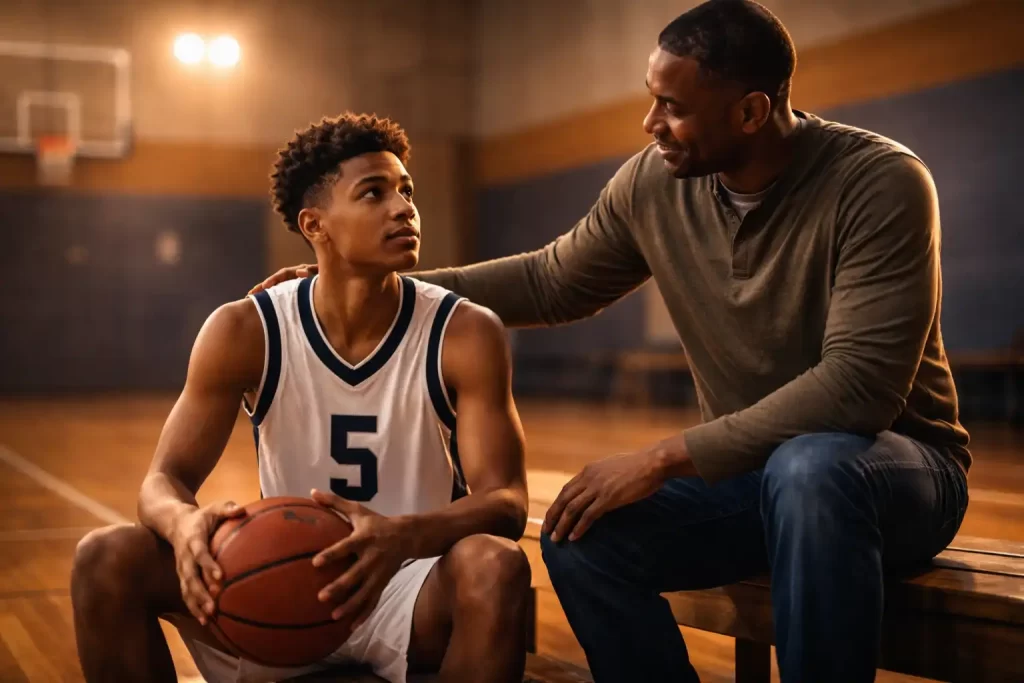
How Parents Can Support a Basketball Player Without Adding Pressure
A practical guide for parents on how to support a high school basketball player's growth, confidence, and development without adding pressure.
If you're the parent of a high school basketball player, you're walking a difficult line.
You want to help.
You want to protect.
You want to make sure opportunities aren't missed.
At the same time, you don't want to:
- Burn your child out
- Damage confidence
- Strain your relationship
- Turn basketball into a source of anxiety
Most parents aren't "doing too much" because they're controlling. They're doing too much because they care.
This article is a practical playbook for parents who want to support their athlete's growth, development, and opportunities without adding pressure or confusion.
The Most Common Parenting Mistake in Youth Sports
The most common mistake isn't being too involved. It's being involved in the wrong ways.
Pressure usually doesn't come from expectations alone. It comes from:
- Constant evaluation
- Comparisons with other players
- Emotional reactions to performance
- Trying to manage outcomes instead of habits
The goal isn't to step back completely. The goal is to support what actually helps.
What Young Athletes Need Most From Parents
High school athletes need many things from coaches and teammates. From parents, they need something different.
They need:
- Stability
- Perspective
- Encouragement
- Structure
- Trust
When those are present, athletes perform better — and enjoy the process more.
Understanding the Athlete's Reality
Basketball already brings pressure. Players are dealing with:
- Playing time
- Role uncertainty
- Physical fatigue
- Academic demands
- Social dynamics
- Comparison culture
When parents add pressure — even unintentionally — it multiplies stress instead of reducing it.
Support should feel like a safe base, not another evaluation.
The Difference Between Support and Pressure
The words parents use matter more than most realize. Here's how the same moment can land very differently:
✓ Support Sounds Like
- "What did you learn today?"
- "How are you feeling physically?"
- "What are you working on improving?"
- "I'm proud of your effort."
✗ Pressure Sounds Like
- "Why didn't you shoot more?"
- "You should be starting."
- "That coach doesn't know what they're doing."
- "Other kids are getting offers already."
The words may seem small. The impact is not.
Let Coaches Coach (Even When It's Hard)
One of the hardest roles for parents is trusting coaches. Even good coaches:
- Make decisions parents disagree with
- Prioritize team needs over individuals
- Teach lessons through discomfort
When parents undermine coaches:
- Athletes become conflicted
- Trust erodes
- Accountability disappears
That doesn't mean parents stay silent in serious situations. It means concerns are handled calmly, privately, and constructively.
Academics: The Quiet Advantage Parents Control
If there's one area where parents have enormous influence, it's academics. Strong academic habits:
- Reduce stress
- Increase recruiting options
- Improve admissions outcomes
- Signal responsibility to coaches
Parents help most by:
- Monitoring grades early
- Encouraging communication with teachers
- Reinforcing time management
- Valuing school as non-negotiable
Basketball opportunities expand when academics are solid. For a closer look at what that day-to-day discipline looks like, see our guide on the daily routine of a college-level basketball player — habits that start with how a student-athlete manages school.
Recruiting: Where Parents Often Overstep (Unintentionally)
Recruiting creates anxiety because it feels uncertain. Common parent missteps include:
- Emailing coaches excessively
- Comparing timelines
- Chasing exposure before readiness
- Speaking for the athlete
- Treating silence as failure
Coaches prefer hearing from players, not parents. Parents help by:
- Encouraging professionalism
- Helping organize information
- Staying patient with timelines
- Supporting multiple pathways
One of the most effective things a parent can do is help their athlete build a recruiting profile that lets the player's game speak for itself — giving coaches what they need without parents having to chase them.
Managing Expectations (For Everyone)
Not every player will:
- Play Division I
- Get a scholarship
- Commit early
- Be a star
That doesn't mean basketball isn't valuable. Parents who keep expectations flexible:
- Reduce stress
- Preserve relationships
- Allow growth
- Keep doors open longer
The "right" outcome is the one that fits the athlete — not someone else's highlight reel. In fact, understanding how basketball helps college admissions often opens parents' eyes to how many doors exist beyond a Division I scholarship.
Parent Perspective: How to Talk After Games
How to Talk After Games
Post-game conversations matter more than most parents realize. Here's what helps:
- Let the athlete initiate
- Ask open-ended questions
- Listen more than talk
- Avoid immediate critique
Sometimes the best things to say are:
"I loved watching you play."
"I'm proud of how you handled that."
"Let me know if you want feedback later."
Athletes replay games in their own heads already. They don't need a second coach riding home.
Social Media, Comparison, and Modern Pressure
Today's athletes are constantly comparing themselves. Social media surfaces other players' highlights, offers, and milestones in real time. Parents can help by:
- Normalizing different paths
- Limiting comparison conversations
- Emphasizing growth over attention
- Reinforcing self-worth beyond performance
Confidence grows in environments where athletes feel accepted regardless of outcomes.
Long-Term Development Beats Short-Term Wins
The parents who help most:
- Think in years, not weekends
- Value habits over stats
- Encourage resilience
- Trust the process
Basketball development is not linear.
There will be setbacks.
There will be late growth spurts.
There will be unexpected opportunities.
Per NCAA student-athlete guidelines, the development of academic habits and character alongside athletic performance is essential to long-term success — at every division level.
What Coaches Appreciate About Great Parents
What Coaches Notice & Remember
Coaches notice parents who:
- Support the team
- Communicate respectfully
- Encourage accountability
- Reinforce values
- Stay composed
These parents make programs healthier — and athletes more successful. A great parent in the stands is a competitive advantage for their kid.
The Bottom Line for Parents
You don't need to manage basketball. You need to:
- Provide structure
- Offer perspective
- Protect balance
- Encourage ownership
- Stay steady when emotions run high
Athletes perform best when they feel supported, not scrutinized.
What To Do Next
If you're supporting a high school basketball player:
- Focus on habits, not outcomes
- Encourage independence
- Keep academics strong
- Stay patient with timelines
- Help organize, not control
Platforms like HighSchoolBasketballPortal.com help families keep information, development, academics, and exposure organized in one place — reducing stress and improving clarity for both athletes and parents.
Your role matters more than you think. And when done well, it becomes one of your athlete's greatest advantages.
Support Your Athlete the Right Way
The goal isn't to control your athlete's journey. It's to support it in a way that builds confidence, discipline, and long-term success. High School Basketball Portal helps families organize academics, development, and exposure into one clear system — reducing stress and improving communication.
Create Your Player Profile Parents — Learn How to Support Your Athlete's Growth